Competency 15 Guide

Value and promote Indigenous knowledge, worldviews, cultures and history

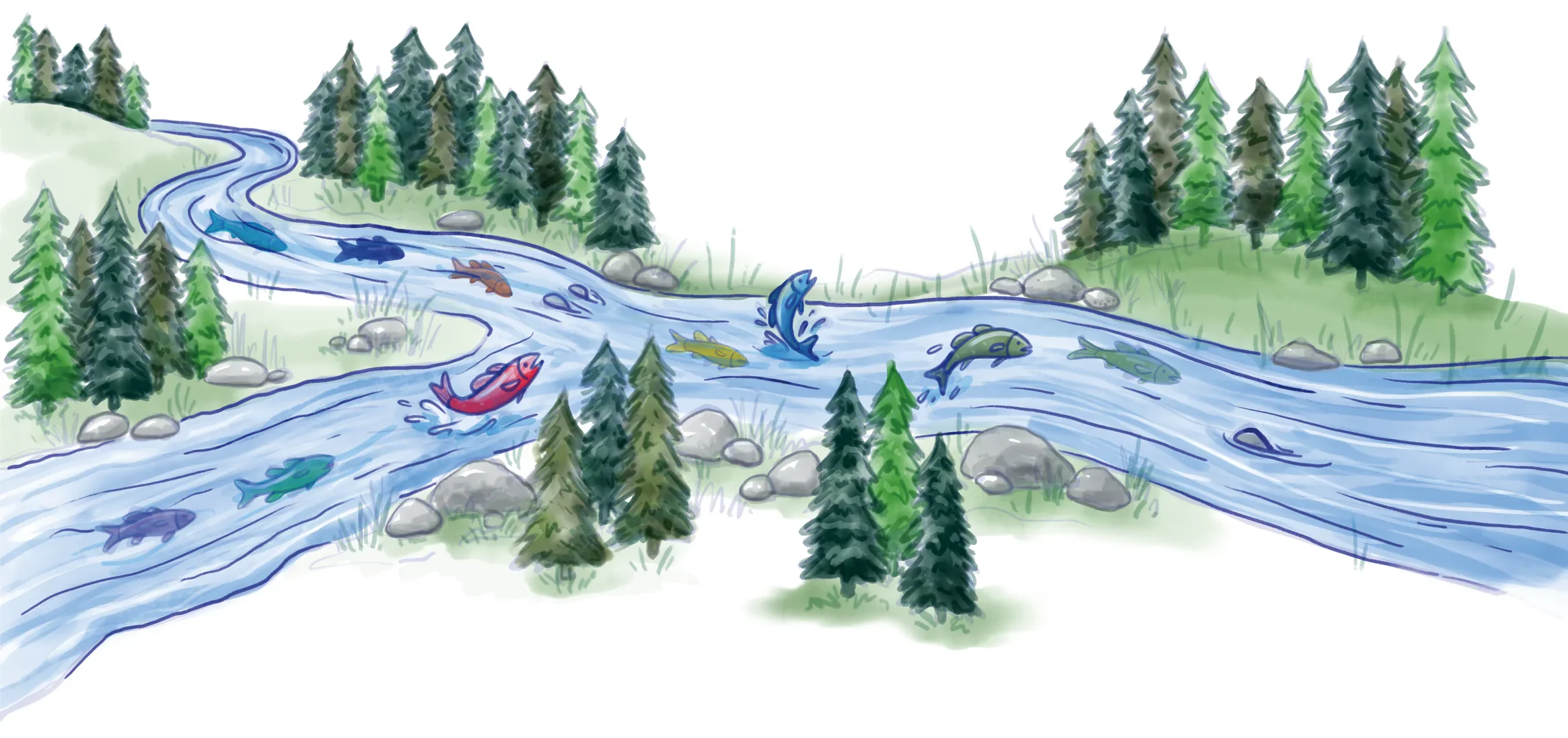
Two rivers lined with spruce trees join into one; coloured fish swim in them and leap out of the water.

The image of the two rivers in the introduction to this guide symbolizes two worldviews on learning, knowledge and education. One represents Indigenous ways of knowledge; the other, westernized ways of knowledge production. Each carries its vision of what it means to acquire and transmit knowledge and to support personal growth.

This guide aims to create a meeting place between these two rivers. It urges us to look beyond a narrow view of academic success to adopt a more global, holistic and relational approach to education.

Read more

10 dimensions to explore

We recognized the complementarity and interdependence of the different dimensions of competency 15. Rather than treating them as distinct components or ranking them in an hierarchy, we chose to view them as a cohesive whole, in constant interaction. This holistic mindset is part of an experiential understanding of learning, where knowledge develops through dialogue, action, observation and reflection, rather than in a strictly linear or prescriptive framework.

About this guide

This guide is primarily intended for individuals in teacher training, regardless of the path they take to become teachers. It also serves as a reference tool for all educators seeking to reflect on and evolve their practices in a spirit of reconciliation, respect and recognition of Indigenous knowledge.

Learn more about the guide

© FNEC, 2026. All rights reserved. | Contact | Privacy Policy